
Introduction
Across Africa, Southeast Asia, and parts of Latin America, oil palm farming supports millions of families. But it also creates large amounts of leftover biomass—empty fruit bunches, palm kernel shells, and fiber. For years, much of this waste was burned or left to rot, causing air pollution and methane emissions. Today, green engineers are turning this problem into a solution through a new idea: the self cleaning streetlight oil palm waste system.
This innovation combines two powerful trends—renewable energy and smart infrastructure. It uses palm waste to produce bioenergy or recycled materials for solar-powered streetlights that can clean their own panels. The result is better lighting, lower maintenance costs, and cleaner communities. In this article, you will learn how the system works, why it matters in 2026, and how it supports green infrastructure goals. We will break down each part in simple words, provide real data, and answer common questions to help you understand the full picture.
Why Oil Palm Waste Is a Growing Challenge
Oil palm trees produce fruit used in cooking oil, cosmetics, and biofuel. According to the Food and Agriculture Organization (FAO), global palm oil production remains above 75 million tons per year as of 2026. For every ton of palm oil, several tons of waste are created.
Main types of waste include:
- Empty fruit bunches (EFB)
- Palm kernel shells (PKS)
- Palm oil mill effluent (POME)
- Palm fiber
If not managed well, this waste can:
- Release methane gas
- Pollute water sources
- Cause open burning and smoke
- Attract pests
Governments are now encouraging circular economy models. Instead of treating palm residue as trash, it can be used to generate bioenergy, compost, or construction materials. This shift supports climate goals and aligns with the U.S. Department of Energy’s bioenergy roadmap (energy.gov).
The lighting sector has found a smart way to use this resource—by integrating it into renewable streetlight systems.
What Is a Self-Cleaning Solar Streetlight?
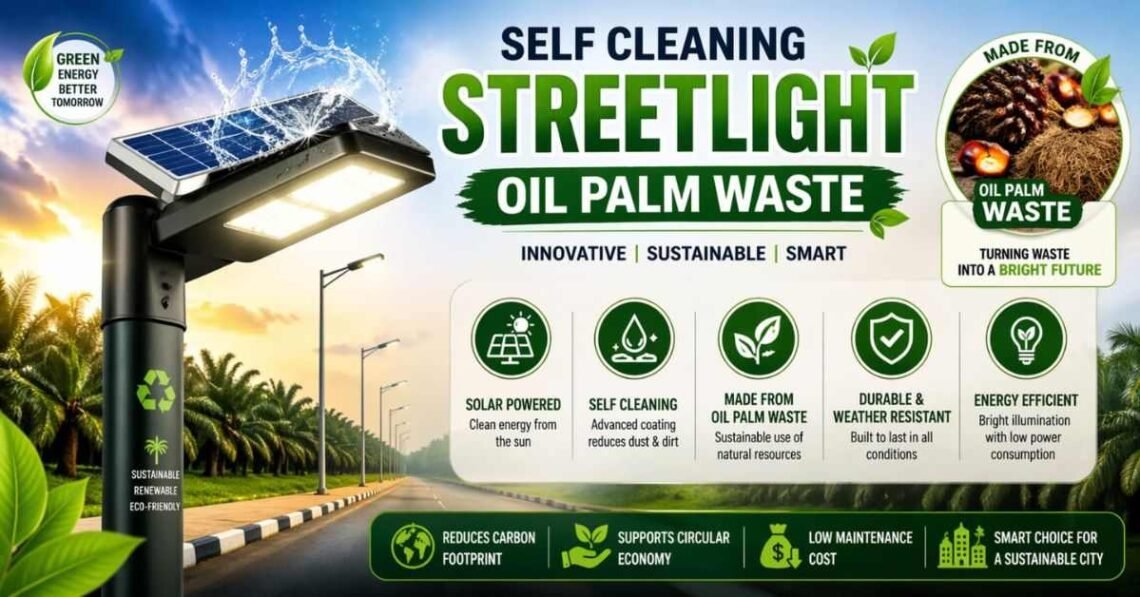
A self-cleaning solar streetlight is a lighting unit powered by solar panels that automatically removes dust and dirt from its surface. Clean panels produce more electricity. In dusty or tropical areas, dirt can reduce solar efficiency by 15–30%.
The self cleaning streetlight oil palm waste model adds another layer of sustainability. It uses palm biomass either:
- As biofuel to help power hybrid systems
- As recycled composite material for light poles
- As biochar to support battery storage systems
How Self-Cleaning Technology Works
Most systems use one of these methods:
- Rotating brush system – A small motor moves a soft brush across the panel.
- Electrostatic cleaning – Electric pulses remove dust without water.
- Hydrophobic nano-coating – Rainwater washes off dirt naturally.
These features reduce maintenance costs and improve long-term performance. In rural or remote areas, this is very important because manual cleaning is expensive and time-consuming.
Sustainability & Environmental Impact
This innovation promotes sustainability by converting oil palm waste into clean energy for self‑cleaning streetlights. It reduces landfill use, lowers carbon emissions, and supports eco‑friendly urban lighting solutions that create safer, greener communities with long‑term environmental benefits.
How Palm Waste Is Converted into Energy
Palm biomass can be converted into usable energy in several ways:
1. Biomass Combustion
Palm kernel shells are burned in controlled systems to generate electricity.
2. Biogas Production
Palm oil mill effluent (POME) produces methane gas. This gas can power small generators.
3. Biochar Creation
Through pyrolysis (heating without oxygen), palm waste becomes biochar, which stores carbon and improves soil health.
Energy Potential of Palm Waste
| Waste Type | Energy Use Type | Average Energy Output |
| Palm Kernel Shells | Combustion Fuel | 16–18 MJ/kg |
| Empty Fruit Bunches | Biomass Fuel | 14–17 MJ/kg |
| POME | Biogas Production | 20–25 m³ methane/ton |
This renewable energy can support lighting systems in farming regions. Instead of depending only on the grid, communities can build local microgrids powered by farm residue.
Combining Smart Lighting and Biomass Power
When engineers combine solar panels with palm biomass energy, they create a hybrid system. The self cleaning streetlight oil palm waste approach uses solar power as the main energy source and palm bioenergy as backup during cloudy days.
Smart Features in 2026
Modern smart streetlights now include:
- Motion sensors (dim when no one is around)
- IoT connectivity (remote monitoring)
- Lithium iron phosphate batteries (longer life)
- Automatic dust detection
These features reduce power waste and extend system life to 10–15 years.
System Comparison
| Feature | Traditional Solar Light | Smart Hybrid Biomass Light |
| Cleaning Method | Manual | Automatic |
| Backup Power | None | Biomass Generator |
| Maintenance Cost | Medium | Low |
| Lifespan | 5–7 years | 10–15 years |
This integration makes lighting systems stronger and more reliable in rural palm-growing areas.
Explore self-cleaning streetlight using oil palm waste innovation with insights alongside Ravi Sihag age details.
Real-World Example: Palm Belt Communities
In parts of West Africa and Indonesia, pilot projects using the self cleaning streetlight oil palm waste model have shown strong results.
Community benefits reported include:
- 40% lower lighting maintenance costs
- 25% increase in nighttime business activity
- Reduced diesel generator use
For example, small farming towns now use palm shell bioenergy to charge backup batteries. The solar panels stay clean thanks to automated brush systems, reducing labor needs.
According to a 2025 Forbes Clean Energy report, hybrid renewable systems are growing fastest in agricultural regions where biomass is easily available.
These real-world cases show that renewable lighting is not just theory—it works in everyday village life.
Environmental Impact and Carbon Reduction
The environmental benefits are significant. The self cleaning streetlight oil palm waste system supports climate action in several ways:
- Reduces methane release from rotting waste
- Replaces diesel-powered streetlights
- Lowers carbon emissions
- Promotes circular economy practices
Estimated Carbon Savings
| Energy Source | CO₂ Emissions per kWh |
| Diesel Generator | 0.8 kg CO₂ |
| Grid (Coal-heavy) | 0.9 kg CO₂ |
| Solar + Biomass Mix | 0.1–0.2 kg CO₂ |
Lower emissions mean cleaner air and healthier communities. Schools and hospitals benefit from better lighting without pollution.
Cost and Investment Considerations
Initial installation costs are higher than simple solar lights. However, long-term savings are stronger.
Cost Breakdown (Average 2026)
- Basic solar streetlight: $900–$1,200
- Smart hybrid system: $1,500–$2,200
- Annual maintenance savings: up to 30%
Investors and governments see value in systems that last longer and require fewer repairs. International development banks now support renewable lighting in rural infrastructure programs.
Payback time is usually 3–5 years, depending on energy prices and biomass availability.
Challenges and How They Are Solved
Like any new technology, the self cleaning streetlight oil palm waste solution faces challenges.
Common Issues
- High upfront cost
- Technical skill requirements
- Supply chain logistics
- Weather damage
Solutions in 2026
- Government subsidies for green infrastructure
- Local technician training programs
- Modular design for easy repair
- Stronger corrosion-resistant materials
Universities are also researching better nano-coatings for solar panels (see research from mit.edu on solar materials innovation).
With proper planning, these challenges are manageable.
Why This Technology Supports Green Infrastructure Goals
Green infrastructure means building systems that protect nature while supporting people. Smart lighting powered by agricultural waste fits perfectly into this idea.
It supports:
- United Nations Sustainable Development Goal 7 (Affordable and Clean Energy)
- SDG 11 (Sustainable Cities and Communities)
- SDG 13 (Climate Action)
By using farm waste locally, communities reduce dependence on imported fuel. This increases energy security and supports rural economies.
It also improves safety. Better street lighting reduces accidents and crime, especially in rural roads and market areas.
The Future of Renewable Smart Lighting
The future of the self cleaning streetlight oil palm waste model looks strong. Innovations expected by 2030 include:
- AI-based cleaning schedules
- Integrated EV charging points
- Carbon credit tracking systems
- Advanced recyclable batteries
As cities and rural areas both move toward net-zero goals, hybrid renewable lighting will become more common.
Experts predict that agricultural biomass will supply up to 10% of rural microgrid energy in tropical regions by 2035.
This technology is not just about light—it is about smarter, cleaner communities.
Frequently Asked Questions (FAQs)
What makes these streetlights “self-cleaning”?
They use brushes, coatings, or electric systems to remove dust automatically.
Is palm waste really renewable?
Yes, it is produced every harvest season and can be reused continuously.
Are these systems expensive?
They cost more at first but save money over time through lower maintenance.
Can they work during rainy seasons?
Yes, they use battery storage and sometimes biomass backup power.
Are they safe for the environment?
Yes, they reduce emissions and reuse waste that would otherwise pollute.
Conclusion
The self cleaning streetlight oil palm waste innovation shows how simple ideas can create powerful change. By turning farm leftovers into clean energy and combining it with smart solar lighting, communities gain safer roads, lower costs, and cleaner air. This approach supports green infrastructure, reduces carbon emissions, and strengthens rural economies.
In 2026, sustainable development is no longer optional—it is necessary. Technologies that mix renewable energy, smart systems, and circular economy thinking will lead the way forward.
If you are a policymaker, engineer, investor, or community leader, now is the time to explore biomass-powered smart lighting projects. Small pilot programs can grow into long-term infrastructure solutions that benefit people and the planet.
Let’s build brighter streets and cleaner futures—starting today.

